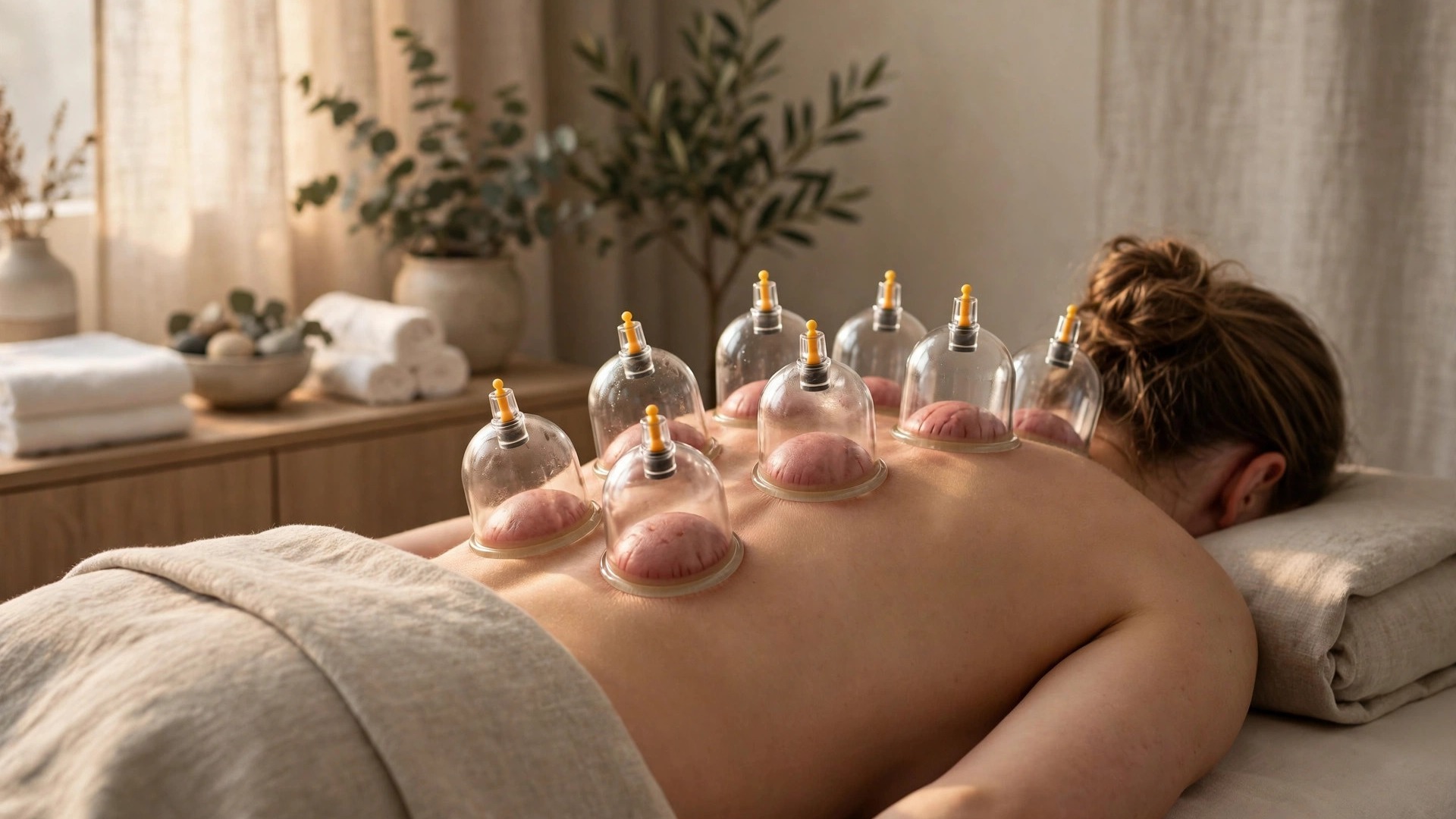
You’ve seen the photos: athletes and actors covered in perfectly round purple circles. That’s cupping — a traditional therapy where cups are placed on the skin and suction is used to draw the tissue upward. It’s offered at many Calgary acupuncture and TCM clinics, usually as an add-on to acupuncture or massage. The circles look dramatic, but they’re the least mysterious part of the treatment. Here’s what cupping is, what actually causes the marks (spoiler: it isn’t “toxins leaving the body”), what the evidence says, and who should skip it.
What cupping is
Cupping is old — versions of it appear in ancient Egyptian, Chinese, and Middle Eastern medicine. In traditional Chinese medicine, it’s used alongside acupuncture and tuina massage, traditionally to move “stagnant” blood and qi in areas of pain and tightness.
The modern version is simple. A practitioner places cups — glass, thick plastic, or soft silicone — on your back, shoulders, or wherever you’re tight or sore. Air is drawn out of the cup with a small pump, or (in traditional fire cupping) a brief flame is used to warm the air before the cup goes on. Either way, the result is the same: suction that gently lifts the skin and underlying tissue into the cup.
Cups are usually left in place for several minutes. Sometimes the practitioner glides them across oiled skin instead, which feels like a deep, reverse massage — pressure pulling up instead of pushing down.
So what are the round marks, really?
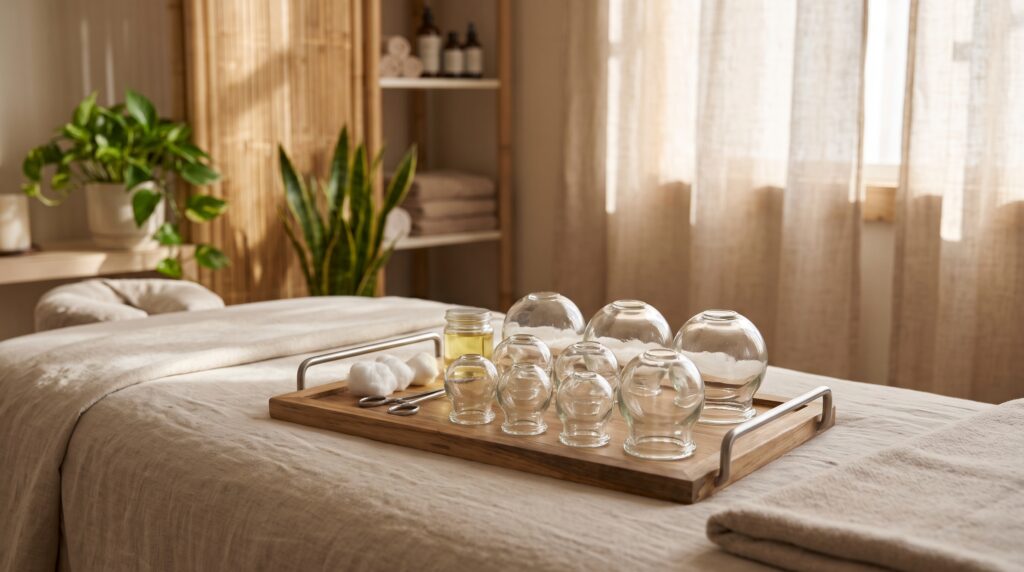
The marks are bruises. Suction increases blood flow to the area and the pressure causes tiny blood vessels (capillaries) just under the skin to break, exactly the way any bruise forms. Blood collects near the surface, and you’re left with a round mark that can range from faint pink to deep purple.
A few honest clarifications, because cupping attracts myths:
- The marks are not toxins being pulled out of your body. There is no good scientific evidence that cupping removes toxins, and your liver and kidneys already handle detoxification around the clock. Darker marks don’t mean “more toxins” — they mostly reflect stronger suction, longer time, and how easily your skin bruises.
- They don’t usually hurt. The marks look worse than they feel; most people describe the treated area as looser or less achy, not sore. Tenderness is possible, though.
- They fade like any bruise — typically lightening day by day and disappearing within several days to a couple of weeks, depending on how dark they were and how fast you personally heal.
If you have wedding photos, a beach trip, or a backless outfit in your near future, schedule cupping accordingly — or ask for lighter suction.
What does the evidence say?
People most often try cupping for back and neck pain, shoulder tightness, and general muscle soreness. Practitioners and many patients report short-term relief, and some small clinical studies have found modest short-term benefits for certain types of pain.
The fair caveats: the overall evidence base is limited, studies are often small, and cupping is nearly impossible to test against a convincing placebo — it’s hard to fake suction without the participant noticing. That makes results easy to overstate. Claims that cupping treats internal diseases, infections, or serious medical conditions go well beyond what evidence supports.
A sensible way to think about it: cupping is a low-risk comfort measure for muscle aches and tension for most healthy adults, sometimes a genuinely pleasant one. It isn’t a proven treatment for disease, and it shouldn’t delay proper medical care for pain that’s severe, unexplained, or getting worse.
Who should be careful — or skip it
- Broken, irritated, sunburned, or infected skin — no cups on it, full stop.
- Bleeding disorders or blood thinners — suction means bruising; talk to your practitioner and doctor first.
- Pregnancy — cupping over the abdomen and lower back is generally avoided; tell your practitioner.
- Varicose veins, blood clots, or very fragile skin — these areas should be avoided, and deep suction may be off the table entirely.
- Fire cupping burns — with the traditional flame method there is a small burn risk, which is one reason many clinics now use pump or silicone cups instead. Burns and blisters from cups left on too long are the most common real-world complaint, so speak up if suction feels too strong.
One more clarification: “wet cupping” (also called hijama) is a different practice that involves small skin incisions and drawing blood. That is not what most Calgary TCM clinics mean by cupping. Always confirm which type you’re getting before you start.
In Alberta, cupping offered as part of TCM care is typically provided by registered acupuncturists (regulated by the College of Acupuncturists of Alberta) or by registered massage therapists as an add-on technique. Either way, clean single-client equipment handling and a clear explanation beforehand are good signs.
Frequently asked questions
Does cupping hurt?
The suction feels like a firm pulling or tightness, sometimes intense for the first few seconds, then it settles. It shouldn’t be painful. If it is, say so — the practitioner can release some pressure immediately.
How long do the marks last?
Usually several days, occasionally up to about two weeks for darker marks. Every body heals at its own pace; lighter suction leaves lighter, shorter-lived marks, and your practitioner can adjust if marks are a concern.
Can I shower, work out, or swim right after?
Generally yes to normal daily life, though practitioners often suggest keeping the area warm, avoiding very cold exposure right after, and giving hard training a rest that day. Your skin may be a bit sensitive where the cups were — treat it gently.
Is cupping a detox?
There’s no good evidence for that claim, despite how often it’s repeated. If you feel better after cupping, the likelier explanations are increased local blood flow, loosened tight tissue, and the general effect of lying down and being looked after for half an hour — which are perfectly good outcomes on their own.
How is cupping different from massage?
Massage presses tissue down and in; cupping lifts it up. Some people find the pulling sensation reaches tight spots differently, and gliding cups feel like a deep massage in reverse. The two are often combined in the same visit.
Want to find a clinic that offers it? Browse Calgary clinics in our clinic directory.
