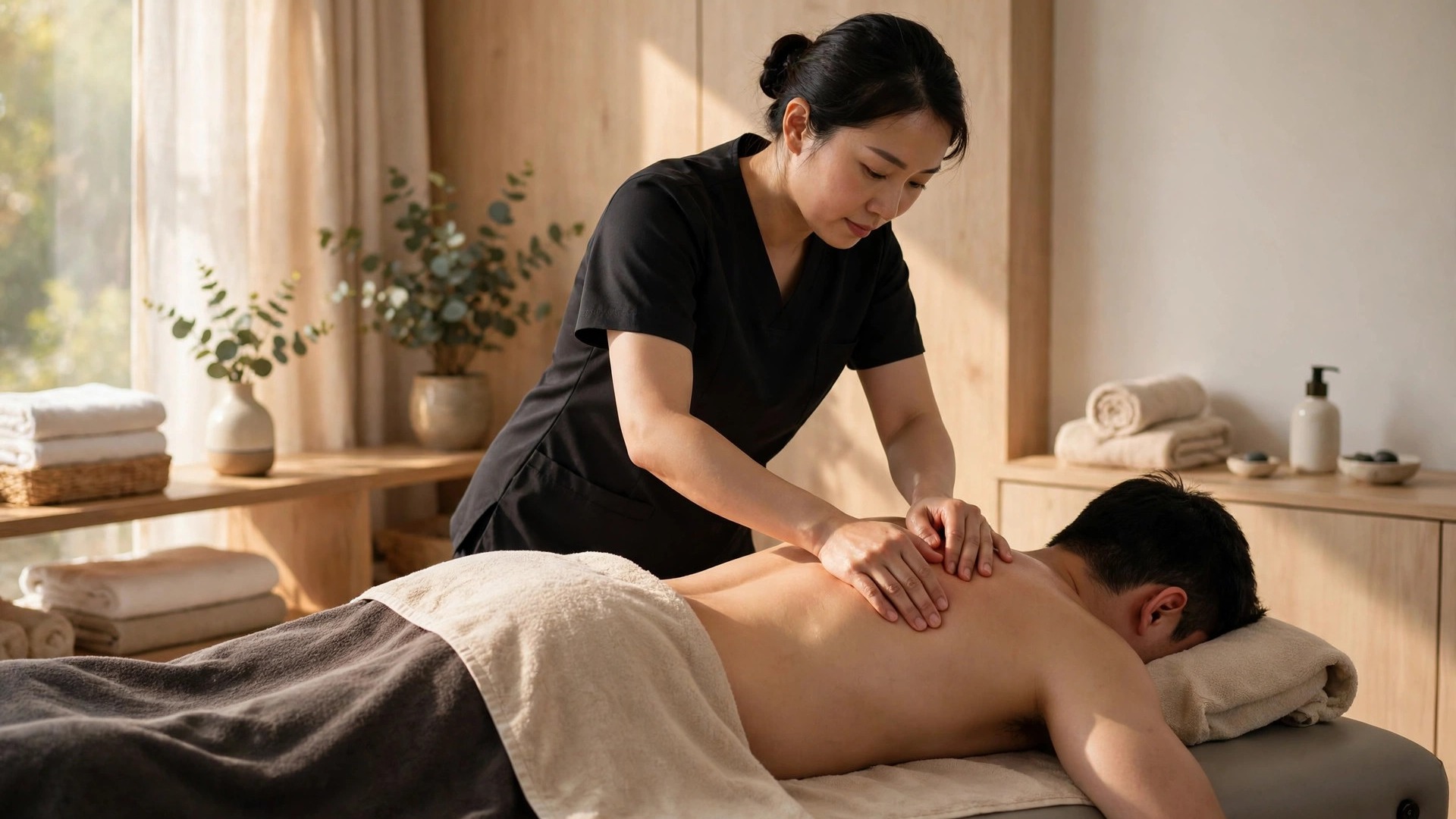
Tuina (pronounced “twee-nah”) is the massage branch of traditional Chinese medicine — and if you’re picturing a quiet spa, scented oil, and drifting off to sleep, adjust the picture. Tuina is active, targeted bodywork: rolling, pressing, kneading, and stretching, usually done over your clothing, often aimed at a specific problem like a stiff neck or a stubborn lower back. It’s offered at many Calgary TCM clinics, frequently in the same visit as acupuncture. Here’s how it works and how it really differs from the massage you already know.
What tuina is
The name tells you the method: tui means “push” and na means “grasp” — two of its core hand techniques. Tuina has been practised in China for centuries as a medical therapy, not just a relaxation service. Practitioners use fingers, palms, knuckles, and elbows in rhythmic patterns: rolling along a tight muscle, kneading, pressing firmly on specific points, pushing along a limb, and gently moving or stretching joints.
Like acupuncture, tuina works within the TCM framework — treating along meridians and at acupuncture points, according to the pattern the practitioner identifies. Unlike acupuncture, there are no needles, which makes it a common entry point for people who are needle-shy. In China, tuina is a standard department in TCM hospitals; in Calgary, you’ll most often find it inside acupuncture and TCM clinics, sometimes offered by massage therapists with specific tuina training.
How it differs from regular massage
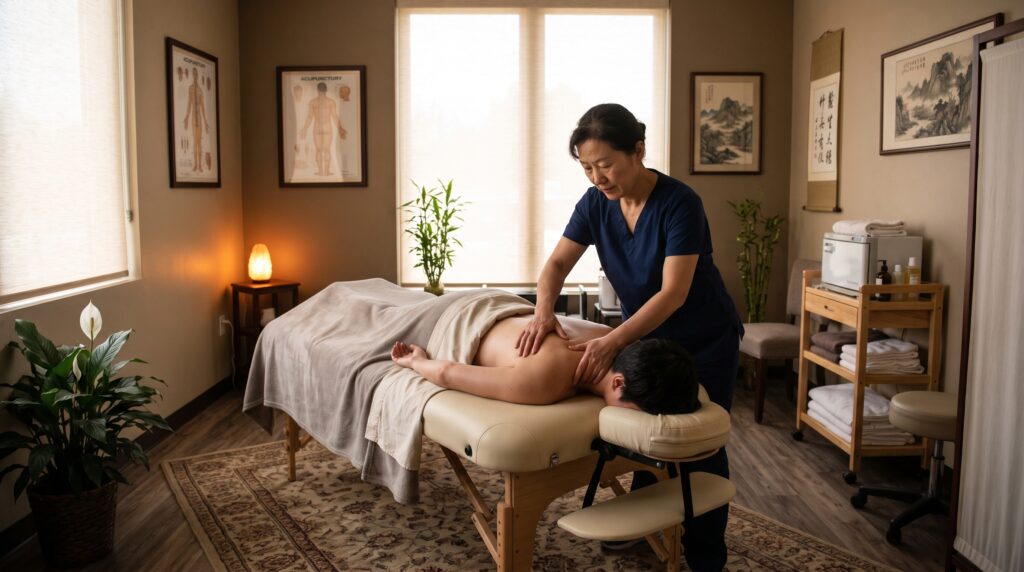
| Tuina | Typical relaxation / deep-tissue massage | |
|---|---|---|
| Main goal | Address a specific complaint within a TCM treatment plan | Relaxation, general muscle tension, recovery |
| Clothing | Usually stays on; work is done over clothes or a sheet | Skin contact with oil or lotion is typical |
| Techniques | Rolling, pressing, grasping, kneading, acupoint pressure, stretching and joint movement | Long strokes, kneading, sustained deep pressure |
| Framework | Meridians and acupoints; may be paired with acupuncture, cupping, or herbs | Anatomy and muscle groups |
| Feel | Firm, rhythmic, and active; you may be repositioned or stretched | Ranges from gentle to deep, but generally more passive |
Neither is “better” — they’re built for different jobs. If you want to unwind and de-stress, a relaxation massage is the right tool. If you have a cranky shoulder that your practitioner wants to work on as part of a TCM treatment plan, that’s tuina’s home turf. Plenty of Calgarians use both, for different reasons.
What a session feels like
Expect to stay dressed in loose clothing. A focused session might last 20 to 30 minutes on one problem area, or form part of a longer combined visit with acupuncture. The practitioner works in steady, repetitive motions — a forearm rolling along your back, thumbs pressing points beside the spine, a shoulder gently mobilized through its range.
Tuina can be surprisingly firm. A good practitioner checks in and adjusts, and the right sensation is “strong but good” — deep pressure on a tight spot, followed by a feeling of release. It should not be a grit-your-teeth endurance test. Bruising occasionally happens after vigorous work on very tight areas, especially if you bruise easily.
What people use it for — and an honest word on evidence
In Calgary, people most commonly get tuina for neck and shoulder stiffness (desk workers, take note), lower back tightness, sports-related aches, and general muscle tension. Traditionally it’s also used for things like digestive discomfort and stress, usually alongside other TCM treatments.
On evidence: tuina has been studied mainly in China, often for musculoskeletal pain, with results that are promising in places but hard to generalize — studies are frequently small or combined with other treatments, making tuina’s solo effect hard to isolate. The cautious summary is that tuina is a reasonable, low-risk option for muscle and joint aches as part of a broader plan, not a proven fix for internal medical conditions. Any clinic claiming tuina cures disease is overselling it.
Who should be careful — or skip it
- Fractures, recent injuries, or recent surgery — healing tissue shouldn’t be pressed, stretched, or mobilized until it’s cleared to be.
- Osteoporosis — deep pressure and joint techniques may need to be softened or avoided; tell your practitioner.
- Open wounds, rashes, or skin infections — not worked on, period.
- History of blood clots (such as DVT) — deep pressure on the legs can be risky; raise it before the session.
- Pregnancy — certain points and techniques are traditionally avoided; make sure your practitioner knows.
- Unexplained pain, numbness, or weakness — get that assessed medically first. Tuina is for the ache you understand, not a substitute for diagnosing a new problem.
In Alberta, tuina in a TCM setting is most often provided by registered acupuncturists, regulated by the College of Acupuncturists of Alberta; some registered massage therapists also offer tuina-style work. Whether a session can be claimed under extended health benefits depends on the practitioner’s designation and your plan — worth asking when you book.
Frequently asked questions
How do you pronounce tuina?
“Twee-nah.” You’ll also see it written as tui na. Now you can ask for it at a clinic without pointing at the menu.
Do I have to undress?
Usually not. Tuina is typically done over loose clothing or a sheet, which is one of its practical advantages — it fits easily into a lunch-hour appointment. Wear something you can move and stretch in.
Does tuina hurt?
It can be intense on very tight areas, but it shouldn’t be painful in a “something’s wrong” way. Speak up and the pressure changes. Mild next-day tenderness, like after a workout, isn’t unusual.
How is tuina different from acupressure or shiatsu?
They’re cousins. Acupressure focuses on pressing points, and shiatsu is a Japanese style with its own approach to point pressure. Tuina adds a wider toolkit — rolling, grasping, kneading, and joint movement — and sits inside a full TCM treatment plan, often next door to acupuncture and herbs in the same clinic.
How many sessions will I need?
For a recent, straightforward ache, a few sessions may do it; long-standing problems usually take a course of treatment. Your practitioner should give you a rough plan and reassess — not sign you up forever.
Ready to try it? Browse Calgary clinics in our clinic directory.
