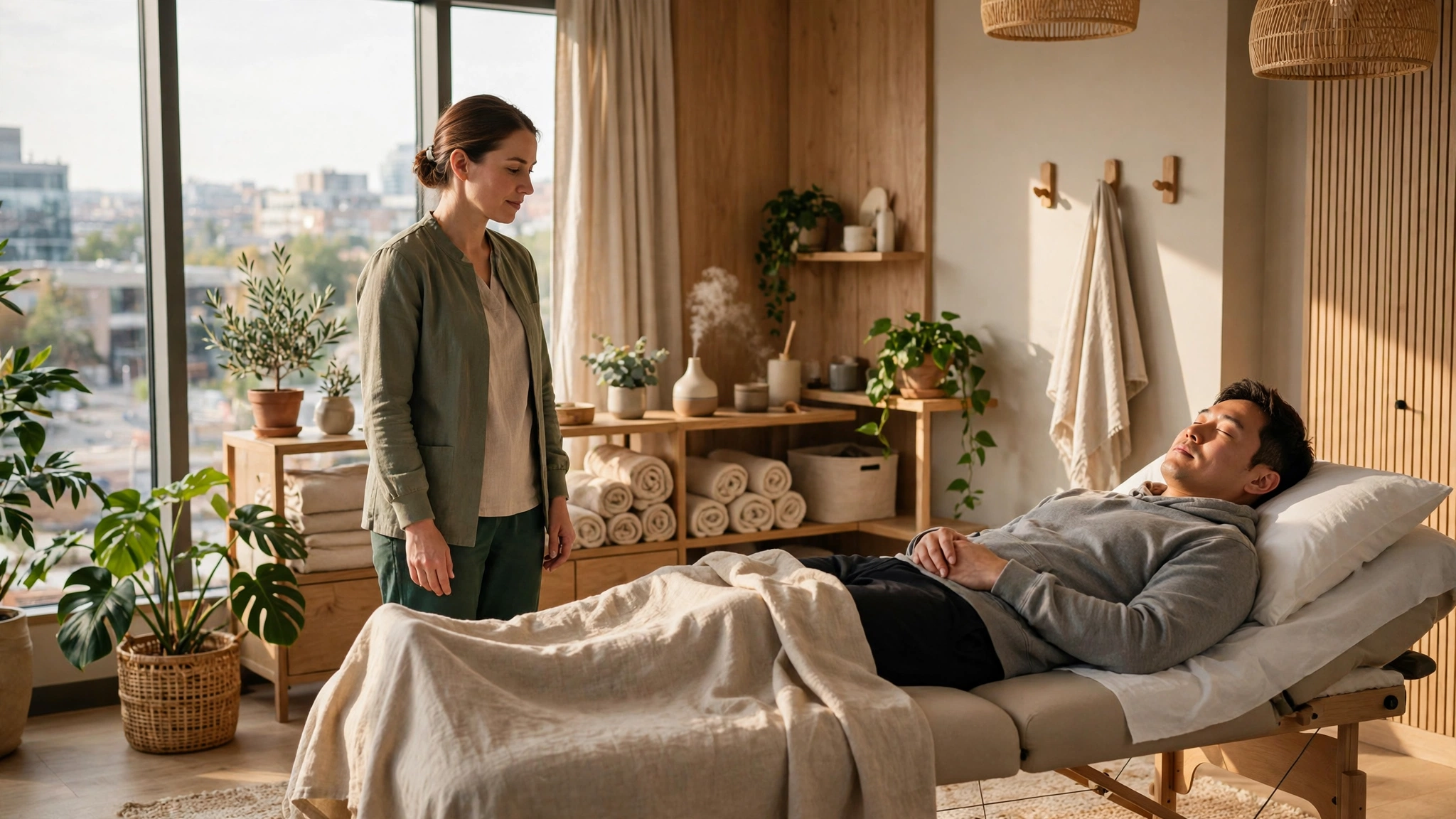
If your mind races at night and your shoulders live up around your ears, you have probably wondered about acupuncture for anxiety. It is a common reason people in Calgary ask about a first appointment — sometimes alongside counselling or medication, sometimes because they want a quieter, drug-free option to try. This guide takes a realistic look: what the research found, where skeptics have a fair point, what a session feels like, and when acupuncture alone is not enough.
Anxiety and everyday stress are not the same thing
Stress is a normal response to pressure — a deadline, a move, a busy season with the kids. It usually eases when the pressure eases. Anxiety is different. It can show up as constant worry that is hard to switch off, restlessness, muscle tension, trouble sleeping, a racing heart, or a sense of dread even when nothing urgent is happening. Generalized anxiety disorder is a diagnosed condition, and it deserves proper assessment.
That distinction matters for how you read the research. Most trials study people with diagnosed anxiety symptoms measured on standard rating scales. Far fewer study ordinary, everyday stress. So when a study reports that scores improved, it is talking about measured symptoms in a specific group — not a guarantee that a stressful week will melt away. Many Calgary patients sit in between: not in crisis, but tense, wired, and sleeping poorly, often with headaches or jaw clenching riding along.
What the research says about acupuncture for anxiety
The honest summary is encouraging but not settled. The U.S. National Center for Complementary and Integrative Health (NCCIH) has long noted that some studies of acupuncture for anxiety have had positive results, but many were of poor methodological quality, and treatments varied so much — different points, different numbers of sessions, different lengths of treatment — that firm conclusions are difficult.
Newer reviews are more positive, and they still carry warnings. A systematic review in the Journal of Clinical Psychology pooled 20 randomized trials with 1,462 participants. It found manual acupuncture reduced anxiety more than sham acupuncture and more than usual care or wait-list controls in the short term. The catch: results varied a great deal from study to study, and longer-term benefit was less clear.
A separate 2025 review focused on generalized anxiety disorder pooled 41 trials with 3,209 participants and also reported favourable results. At the same time, most of those studies had some risk-of-bias concerns, and certainty ranged from very low to moderate.
Put together, a fair reading is this: acupuncture may reduce anxiety symptoms for some people, at least in the short term, and the signal has gotten stronger in recent years. It is not proven to work for every type of anxiety, the average benefit is modest rather than dramatic, and researchers still call for larger, better-designed trials. Anyone who promises it will cure your anxiety is getting ahead of the evidence.
The skeptical view, stated fairly
Skeptics raise points worth hearing. Blinding is hard in acupuncture research — patients often know whether they are getting real treatment — and expectation, rest, and regular attention can all lower anxiety on their own. If part of the benefit comes from lying still in a quiet room while someone takes your symptoms seriously, skeptics argue, that is not the same as needles at specific points doing the work.
Supporters answer that sham needling is not necessarily inert either, and that the comparison many patients care about is simpler: do I feel and function better than before? Both views can be true at once. A realistic expectation is improvement, not erasure — judged over a course of sessions, not a single visit.
What a session for stress actually looks like
A first visit starts with conversation, not needles. Expect questions about your sleep, energy, digestion, and pain, because traditional Chinese medicine (TCM) assessment looks at patterns across the whole body. The practitioner may also check your tongue and pulse. If you are new to this, your first acupuncture visit in Calgary walks through a first appointment step by step.
Treatment uses thin, sterile, single-use needles, often at points on the ears, head, hands, and feet as well as areas of tension. Most people are surprised by how quiet it is: you rest with the needles in place, and many people drift toward sleep. Practitioners usually suggest a short course and then a review, rather than an open-ended plan. Our guide to how many acupuncture sessions you need explains that approach. If stress and headaches travel together for you, see our review of acupuncture for migraines and headaches.
Be cautious of any clinic that guarantees results or pressures you into a large pre-paid package before you know whether it helps you.
Safety, and when acupuncture is not enough
In the large review above, reported side effects were mainly temporary discomfort, minor bleeding, or brief soreness at needle sites, with no severe events reported in those trials. More broadly, acupuncture is generally considered low-risk when performed by a trained practitioner using sterile, single-use needles. In Alberta, acupuncture is a regulated health profession — check that your practitioner is registered with the College of Acupuncturists of Alberta.
Just as important is what acupuncture should not replace. Do not stop prescribed medication or counselling on your own because you are trying acupuncture; if you want to change either, talk with your prescriber first. And get professional help promptly — through your doctor, a mental health professional, or urgent care — if anxiety is severe, if you are having panic that interferes with daily life, if you cannot function at work or at home, or if you ever have thoughts of harming yourself. Acupuncture fits best as complementary care alongside proper support, not as a substitute for it.
How to decide if it is worth trying
Consider a defined trial if your anxiety is mild to moderate, more serious causes and conditions have been properly assessed, and you are willing to judge it honestly: track your sleep and rate your anxiety simply each week, try a course of sessions, then review your own notes. If nothing has shifted, it is reasonable to stop. If you are calmer, sleeping better, and carrying less physical tension, you have your answer — modest, personal, and real.
Frequently asked questions
Does acupuncture really help anxiety?
Recent reviews suggest it may reduce anxiety symptoms for some people in the short term. One pooled 20 trials with 1,462 participants and found greater reductions than sham treatment and usual care, but results varied widely, so the evidence is promising rather than conclusive.
Is acupuncture a replacement for medication or therapy?
No. The evidence supports it as complementary care, not as a proven replacement for counselling, psychiatric care, or prescribed medication. Do not stop or change medication without talking to your prescriber.
How many sessions before I know if it helps?
Trials that found benefit used repeated sessions over several weeks, not a single visit. A sensible approach is a defined trial period with simple tracking of your sleep and anxiety, then an honest review. If nothing has changed, it is reasonable to stop.
What does an anxiety-focused session feel like?
It is usually quiet and restful. Thin, sterile, single-use needles are placed at selected points and you rest with them in place. Many people feel drowsy during treatment. Brief soreness or a small bruise at a needle site can happen.
Is acupuncture safe for anxiety?
It is generally considered low-risk with a trained, registered practitioner using sterile, single-use needles. In Alberta, check registration with the College of Acupuncturists of Alberta. Severe or worsening anxiety still needs professional mental health care first.
Ready to explore your options nearby? Browse our clinic directory to find registered acupuncture clinics across Calgary and compare what each one offers.
